23 March 2013

Six companies investing in African agribusiness, and what we can learn from them

Africa’s agriculture and food industries are attracting increasing interest from investors. This trend is largely fuelled by the fact that the continent has 60% of the world’s uncultivated arable land, with favourable weather conditions in many countries. There is also a belief that rising incomes will spur demand for food products in the years to come. To examine the opportunities and challenges on the continent, How we made it in Africa looks at six companies that have invested in the region’s agribusiness sector.
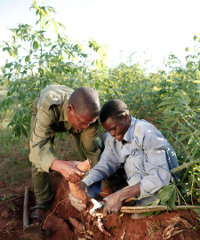
Cassava is one of Africa’s most widely grown crops, but has not been a great commercial success. A Nigerian company, Thai Farm, has, however, achieved success by producing cassava flour.
Silk Invest – betting on food
Silk Invest is a United Kingdom-based frontier market investment company. The firm manages the Silk African Food Fund, which is a private equity fund that invests in processed food, beverages and quick-service restaurant companies on the continent.
Silk Invest sees opportunities in targeting the African consumer from a food and beverages perspective. The fund invests in scalable food companies with the potential to become national and regional leaders.
A significant volume of the packaged food that Africa consumes is currently being imported, creating opportunities to produce these products locally. In a 2011 webcast, Waseem Khan, Silk Invest’s head of private equity, gave the example of Ethiopia, which he said is a large consumer of biscuits. More than 50% of the biscuits consumed in Ethiopia is currently imported. Khan noted that there is a small company based in the Middle East that quadrupled its earnings when it started exporting biscuits to Ethiopia.
Silk Invest’s fund is currently focusing on Kenya, Ethiopia, Egypt, Morocco, Ghana and Nigeria. The fund has so far invested in a confectionary company in Egypt, a quick service restaurant brand in Nigeria, and a biscuit manufacturer in Ethiopia.
Silk Invest believes there is currently a formalisation of food products happening in Africa – a move to branded and better packaged items. “It is about a formalisation of something that is already consumed. It is basically moving from fresh milk directly from the farmer, to fresh milk in a bottle. The price typically does not change, what is changing is the packaging,” said the firm’s CEO Zin Bekkali.
He added that by selling products in improved packaging, many food companies on the continent have been able to grow their revenues by between 20% and 30% annually.
It is often difficult and expensive for African companies to borrow money from banks, and therefore private equity offers an alternative for them to grow their businesses. Khan, however, said that it is important to show these companies that Silk Invest is not there to take over their companies, but to help them grow. “Our view is to be involved in active management with them, and to be there with them for the next three to four years, where they can make money, and we can make money,” he noted.
AGCO – taking advantage of the trend towards mechanisation
Suppliers of agricultural equipment are also looking to Africa as a new growth market. AGCO, a New York Stock Exchange listed multinational company – that designs, manufactures and distributes agricultural machinery such as tractors and harvesters – last year announced that it will invest US$100 million into Africa. AGCO is the world’s third largest agricultural equipment maker and a manufacturer of brands such as Challenger, Massey Ferguson and Fendt.
AGCO’s push into the continent is mainly because it believes African agriculture is drawing growing interest from international investors, attracted by the shift to commercial farming. According to Nuradin Osman, AGCO’s director for Africa and the Middle East, there are three reasons why the company is optimistic about the continent’s agricultural sector. These are:
  • Global factors such as rising populations, increasing income levels in emerging markets, and a growing scarcity of arable land and water.
  • The World Bank attributes 60% of the world’s uncultivated land to Africa, and also suggests that investment in agriculture has the potential to create millions of jobs on the continent.
  • About 10% of cropped land in Africa is prepared by tractor, and only 4% of land is irrigated.
In addition to large-scale commercial farms, AGCO is also targeting smallholder farmers. The vast majority of African farmers are smallholders, and most agricultural companies have some kind of strategy to also cater for their demands. However, most of these small-scale farmers cannot afford tractors and other equipment. To address this, AGCO is partnering with local and regional banks, as well as various development organisations, to provide financing solutions to these farmers. The company is also looking at leasing tractors to farmers.
AGCO also sees value in partnering with local companies in Africa. “There are numerous other benefits for being part of a joint venture with a local partner in Africa. We benefit from the local partner’s knowledge about the country’s culture, language, political system, and business systems. Since a joint venture also entails a significant equity investment, both companies invest significantly in resources, talents, and commitment to the new firm. This provides both companies with advantages in terms of sharing development costs and risks,” said Osman in an interview.
He added that joint ventures have less chance of being nationalised, as the local company also has a significant stake in the business.
How a US company is selling fashion accessories manufactured in Ghana

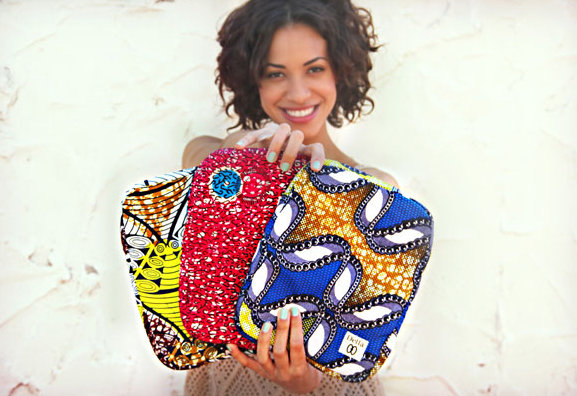
Della is a US-based fashion accessories brand that sells handcrafted bags and other items produced by seamstresses working in the village of Hohoe, Ghana. The company also has an agreement with Apple to manufacture MacBook cases. How we made it in Africa interviews Della founder Tina Tangalakis about the business.
Tina Tangalakis
Tina Tangalakis
Give us an overview of how Della started, and where the company is today.
I began Della when I went to Ghana as a volunteer in September 2009. My background is in design and I was very inspired by the local textiles. Before Ghana, I had freelanced with a company that manufactured accessories in China and distributed all over the US. Upon working with local seamstresses in Ghana, the idea hit me: why not manufacture in Africa? Local seamstresses I met were in need of steady work, and I wanted a career in design on my own terms: with a conscious. Della was a way of combining both.
In the US, Della is set up as a for-profit company, not an NGO. Why is this?
After a lot of research and debating if I should set up Della as a “non-profit” or “for-profit” business, I decided upon “for-profit”. There are several reasons for this:
Technically, Della does qualify for non-profit status due to the programmes and good-will incentives offered to our employees and to the community. However for me these programmes are just an extension of human-decency and the way business should be run. I wanted to take a stand and show the western world, particularly the fashion world, that business can be both responsible and profitable. Also, I feel that non-profit fashion is not taken seriously in the United States. I wanted to prove that high-quality, fashionable products can come from Africa and be sold in the US market.
Second, after my research, it was clear that there were two things needed in order to have a lasting effect on a developing community: education and commerce. Della does both.
Della bags manufactured in Ghana.
How do you manage a business spread out across two continents?
Between Ghana and the US we have about 60 people involved with Della.
Our Ghanaian team is managed by Selorm Nii Addotey, our operations manager and co-founder of Della. Along side him we have two US employees who manage and oversee the team in Ghana. This includes production, sourcing, product development, quality control and distribution. We currently have 35 full-time employees and between 10 and 25 part time employees, depending upon production demands. I am in constant, daily contact with the team through emails, Skype and phone calls.
I also travel to Ghana on a regular basis to help manage and maintain a solid relationship with our team.
In the US I have a modest team of three, with a dedicated group of interns who work alongside us. It is very challenging to manage a business across two continents, but the key to success is finding solid employees who believe in your vision and are willing to work hard in order to make it happen.
Tell us more about the MacBook cases produced for Apple; how did the deal happen?
I find that any major sales accomplishment starts out like a courtship. It basically came down to getting in touch with the correct person at Apple, pitching them our products/story and taking it from there. There were several meetings and a lot of correspondence that spanned almost one year until we secured our first order.
The cases we produce for Apple are custom fit for 11″, 13″ and 15″ MacBook devices. We use authentic Ghanaian fabric to decorate the front and the protective inside lining is made from a Ghanaian-made high-density latex foam.
MacBook cases produced for Apple.
What are the greatest challenges of running this business?
Naturally there are always challenges behind a business, no matter where you work from. A dozen challenges can arise in one day and I find it useful to always be prepared and creative in order to overcome these obstacles.
Currently, we continue to face challenges in working with textile vendors who understand the demands of the US market and can meet our deadlines on time. Aside from ensuring that our textile quality, design and colouring is correct, we need our products to meet industry standards. The US retail market is more strict in regards to the quality and specifications of products. Ensuring that the products we produce are up to these standards is something we need to constantly be aware of. Our goal is to be competitive in the US market, and to do so, we need to hold ourselves to high expectations.
This is not about pushing western ideals or standards on our employees, rather, this is about being competitive on the world market.
And your future plans for Della?
Della has big things lined up for 2013. Currently we are working with a large retailer to launch a clothing collection this summer. We also have private partnerships and collaborations on the horizon which will enable us to grow and spread the word about Della. Our long-term goals include expanding our clothing line, continuing growth with our current retail partners, such as Apple, and expanding our production in Ghana’s Volta region.
http://www.howwemadeitinafrica.com/how-a-us-company-is-selling-fashion-accessories-manufactured-in-ghana/25108/

Africa’s Food Markets Could Create One Trillion Dollar Opportunity by 2030

WASHINGTON, March 4, 2013 - Africa’s farmers and agribusinesses could create a trillion-dollar food market by 2030 if they can expand their access to more capital, electricity, better technology and irrigated land to grow high-value nutritious foods, and if African governments can work more closely with agribusinesses to feed the region’s fast-growing urban population, according to a new World Bank report launched today.
According to the Growing Africa: Unlocking the Potential of Agribusiness report, Africa’s food systems, currently valued at US$313 billion a year from agriculture, could triple if governments and business leaders radically rethink their policies and support to agriculture, farmers, and agribusinesses, which together account for nearly 50 percent of Africa’s economic activity.
“The time has come for making African agriculture and agribusiness a catalyst for ending poverty,” says Makhtar Diop, World Bank Vice President for Africa Region. “We cannot overstate the importance of agriculture to Africa’s determination to maintain and boost its high growth rates, create more jobs, significantly reduce poverty, and grow enough cheap, nutritious food to feed its families, export its surplus crops, while safeguarding the continent’s environment.”
Agribusiness: strong growth opportunities
Due to a combination of population growth, rising incomes and urbanization, strong demand is driving global food and agricultural prices higher.  Supply issues – slowing yield growth of major food crops, slowdown in research spending, land degradation and water scarcity issues, and a changing climate all mean that prices will remain high.  In this new market climate, Africa has great potential for expanding its food and agricultural exports.
Africa holds almost 50 percent of the world’s uncultivated land which is suited for growing food crops, comprising as many as 450 million hectares that are not forested, protected, or densely populated. Africa uses less than 2 percent of its renewable water sources, compared to a world average of five percent. Its harvests routinely yield far less than their potential and, for mainstay food crops such as maize the yield gap is as wide as 60 to 80 percent. Post-harvest losses run 15 to 20 percent for cereals and are higher for perishable products due to poor storage and other farm infrastructure. 
African countries can tap into booming markets in rice, maize, soybeans, sugar, palm oil, biofuel and feedstock and emerge as major exporters of these commodities on world markets similar to the successes scored by Latin America and Southeast Asia.  For Sub-Saharan Africa, the most dynamic sectors are likely to be rice, feed grains, poultry, dairy, vegetable oils, horticulture and processed foods to supply domestic markets. 


The report cautions that even as land will be needed for some agribusiness investments, such acquisitions can threaten people’s livelihoods and create local opposition unless land purchases or leases are conducted according to ethical and socially responsible standards, including recognizing local users’ rights, thorough consultations with local communities, and fair market-rate compensation for land acquired.
“Improving Africa’s agriculture and agribusiness sectors means higher incomes and more jobs. It also allows Africa to compete globally. Today, Brazil, Indonesia and Thailand each export more food products than all of sub-Saharan Africa combined.  This must change,” says Jamal Saghir, World Bank Director for Sustainable Development in the Africa Region.
Value Chains are essential  
Rice: Africa has become a major consumer and importer of rice, and Africans import half the rice they eat and pay top dollar for it, $3.5 billion per year and more.  Ghana and Senegal are significant importers.  Senegal is competitive among its neighbors, but it is held back by the difficulty farmers have in accessing land, capital, finance for irrigation expansion and appropriate crop varieties.  Ghana produces fewer varieties of rice than Senegal, but at significantly higher cost, and levies 40 percent tariffs and other charges on imports. Poor grain quality, cleanliness and packaging are major deterrents for consumers constraining the sector’s performance.
Maize: A food staple for many Africans, maize is grown on 25 million hectares or 14 percent of cropped land. In Zambia where people eat on average 133 kilograms of cereals a year, maize provides half the calories in their diets.  Zambia is competitive when importing maize but fails on exports.  High transport costs, higher labor costs and lower yields combine to increase costs by one-third compared to Thailand, a major international producer of rain-fed maize.  The report argues that Zambia’s future competitiveness depends on raising yields, reducing costs, and removing disincentives for the private sector in markets and trade.
In addition, the study reviewed value chains for cocoa in Ghana and dairy and green beans in Kenya.
“African farmers and businesses must be empowered through good policies, increased public and private investments and strong public-private partnerships,” says Gaiv Tata, World Bank Director for Financial and Private Sector Development in Africa.  “A strong agribusiness sector is vital for Africa's economic future.”
Solutions
Agriculture and agribusiness should be at the top of the development and business agenda in Sub-Saharan Africa. The report calls for strong leadership and commitment for both public and private sectors.  As comparators, the report cites case studies from Uruguay, Indonesia and Malaysia. For success, engaging with strategic “good practice” investors is critical, as is the strengthening of safeguards, land administration systems, and screening investments for sustainable growth.
The report notes that Africa can also draw on many local successes to guide governments and investors toward positive economic, social and environmental outcomes.http://www.worldbank.org/en/news/press-release/2013/03/04/africas-food-markets-could-create-one-trillion-dollar-opportunity-2030?goback=.gde_690327_member_201743988

Cameroon: Nation Settles On New Bean Varieties

Farmers in Cameroon are growing new varieties of beans that are providing up to three times the yields of traditional crops, which have been under attack from pests and disease as well as adverse weather patterns.
Seven varieties of hardier and more nutritious beans are now being distributed to farmers, following extensive trials by the country's Institute of Agricultural Research for Development (IRAD).
Martin Nguegim, a researcher at IRAD,says the varieties were selected from hundreds given to Cameroon by the Pan-Africa Bean Research Alliance (PABRA), a multi-agency initiative that coordinates research on the continent.
Trials and selection of varieties were conducted at the institute and by farmers from 2006 to 2012, he tells SciDev.Net.
"It was only last year that the first varieties were officially selected. We proceeded by selective introduction, testing varieties that best suited the agro-ecological conditions of Cameroon."
Laurent Nounamo, national research coordinator for the programme at IRAD, says that the seven varieties can produce up to three tonnes of beans per hectare compared with 1.5 tonnes for traditional crops. They are also richer in proteins, iron and zinc.
Nounamo confirmed at a meeting (18 February), ahead of Cameroon's 2013-14 agricultural campaign launch, which kicked off this month, that the volume of traditional varieties has been on the decline.
According to Nguegim, about 800,000 farmers in Cameroon have been involved in the selection process for new bean crops since 2006.
He says that long distances between IRAD's research station and farmers are the main problem for promoting the new varieties and suggests setting up local networks of farmers trained in the production of good quality seeds.
Seeds of the new varieties are sold for US$1.52 per kilogram, the same price as traditional seeds.
Sylvain Tchoffo, a farmer who tested the new varieties last year, says: "I harvested 18 bags of beans, three more than the year before, for the same quantity sowed on the same ground. I noticed that caterpillars did not destroy the leaves and the pods of my beans."
Beans are eaten by many in Cameroon and in the region. The food is one of the main dishes in school canteens and is common in family meals.
Researchers from the International Center for Tropical Agriculture (CIAT), the coordinating agency of PABRA, worked with the Cameroonian scientists on the project.
 
This article has been produced by SciDev.Net's Sub-Saharan Africa desk.
http://allafrica.com/stories/201303230102.html

19 July 2012

New markets for African handicraft products

Seeds of Hope: Buy the products, change lives

Hutu and Tutsi women come together in handicraft

To many people in Africa, earning one dollar or euro may be enough to feed a family for a day. Selling handicrafts is a solution for some, but how can they be sold to far-off markets like the US? That is where Seeds of Hope, a non-profit organization in Charlotte, North Carolina (US) comes in. 
The organization ships handicraft products – beads and various woven products such as baskets and purses – made by widows and marginalized African women in Uganda, Rwanda and Burundi to the US. They sell well in local stores and at ‘home parties’. The proceeds of the sales go to the women and the expansion of the microeconomic enterprise to help more women, says Celeste Bundy of Seeds of Hope.

Who makes these products?

“We buy the products from widows of genocide and HIV/AIDS in Rwanda, Burundi and Northern Uganda. Currently, there are 135 women involved in the bead/jewellery making initiative and approximately 40 women in the basket making program in Rwanda and Burundi.”

How did you get the women to work together?

“With the support of local organizations, the women formed work groups, irrespective of their Hutu and Tutsi native tribes. We found that this has been essential in offering social support to members. They can thus counsel and advise each other within the groups and even offer moral support. For example, when a lady in the Gulu group lost a son in an accident, the group members supported and encouraged her during this tough time. Also when one of them is sick they visit the woman and provide needs when necessary. No matter what tribe she is from.”

What do these women get out of it?

“First of all, it is the money to survive without the help of a husband or of families. Feeding and educating children may seem like a small dream, but it is HUGE for a woman whose husband was killed in a rebel attack. Making the handicrafts allows these women to escape the stone quarry where she and her children were previously working to earn the 50 cents a day they need to simply feed themselves.”

What is in the future?

“The bead project has also given many women a brick and mortar house, a better alternative for their former mud and wattle houses. As part of a group activity, adult literacy classes have been initiated for the women, most of whom were initially illiterate.  Group bank accounts have also been established for group saving which helps them to develop a culture of saving and also have a savings when times get hard. These achievements all started with the idea to start selling handicrafts from these regions to homes in the western world. It is in no way ‘aid money’, but well-earned money, coming from hard work. And literally changing the lives of these women.”

New Hana Signs Definitive Agreement to Option the Formerly Producing Musina Copper Project in South Africa

New Hana Signs Definitive Agreement to Option the Formerly Producing Musina Copper Project in South Africa

VANCOUVER, BRITISH COLUMBIA, Jul 18, 2012 (MARKETWIRE via COMTEX) -- New Hana Copper Mining Ltd. ("HML" or the "Company") - (tsx venture:HML) is pleased to announce that it has entered into an Acquisition and Joint Venture agreement (the "Agreement") with BSC Resources Limited. ("BSC") of South Africa whereby the Company has the option to earn up to a 100% interest in the Musina Copper Project (the "Project"), located in northeast South Africa.
The Musina Project
The Musina Project area is comprised of six Prospecting Rights covering 100 square kilometers (10,006.88 hectares) of highly prospective ground which encompasses the Musina fault which is a structure that is known to host a number of formerly producing high-grade copper mines. The Project includes the formerly producing Artonvilla, Spence, Messina, Harper and Campbell underground copper mining operations.
Mining commenced at Musina around 1905 focusing on high grade (25% Cu) surface outcrops. Subsequently, copper mineralization was exploited by five main shafts along the Messina fault zone over a strike length of 15 kilometres to depths of over 1,400 metres below surface. From 1905 to 1993 Musina was operated by Messina (Transvaal) Development Company, after which the name was changed to Messina Ltd. The mine was closed due to low copper prices.
Over 750,000 tonnes of wire-grade copper ingots were fire-refined on site until 1993 when it became uneconomical to continue operating the company's own smelter. Subsequently, concentrates, with an average grade of +40% copper, were transported by rail to Phalabora for smelting and refining.
The management of BSC estimates that tens of millions of tonnes of mineralized material remains at Musina.
Copper mineralization has also been confirmed, through drilling and trenching, at the Mollytoo target. BSC geologists believe that there is considerable potential for the discovery of additional copper mineralization within this target area to a depth of at least 1,500 metres, which is the historic depth of the Harper and Campbell mines, and along strike within and adjacent to the Musina fault.
There is also exploration potential at a partially drilled breccia pipe which may extend mineralization from surface to a depth of at least 1,500 metres. In addition, there are a number of high quality historic copper soil anomalies that remain untested.
The Project area has not previously been flown with modern geophysical techniques which could detect additional blind massive sulphide bodies and/or zones of disseminated mineralization.
Copper sulphide mineralization consists mostly of chalcopyrite, bornite and chalcocite whereas oxide mineralization consists of mostly of malachite and some minor covellite and azurite. The copper mineralization is believed to have originated from magmatic intrusions of late to post-Karoo age. Mineralized emanations intruded the country-rock, mainly along the Musina fault, to form breccia bodies in this fault zone, as well as breccia pipes.
The Project is well supported by infrastructure including roads, railway and is adjacent to the national electrical grid. The Phalabora Copper Smelter and Refinery is located approximately 326 kilometres away from the Project.
Terms of the transaction
The Company can earn its initial undivided 50% interest in the Musina Project by making an initial US$200,000 cash payment to BSC within five (5) business days of the later of that date that five of the six project's prospecting rights are renewed by the South African authorities and TSX Venture approval (the "Effective Date"), and three equal payments of US$100,000 every six months thereafter. As a result, the total cash payment for the initial 50% interest is US$500,000.
To earn its initial undivided 50% interest therein, the Company must also incur total work expenditures aggregating US$5,100,000 on the Project within 36 months of the Effective Date of the Agreement.
The Company shall have the sole exclusive right and option to acquire the remaining 50% undivided interest of the Project by paying a cash amount of US$2,600,000 to BSC and by issuing up to 10 million common shares of the Company to BSC, such that the number of shares will, on the date of issue, equate to a value not greater than US$30 million. Such shares will be issued to BSC within 10 business days after the receipt of a Mining Right from the South Africa Minister of Mineral Resources. The Mining Right shall cover the entirety of the property or any smaller area selected by the Company.
If the Company acquires the initial 50% interest and does not elect to acquire the remaining undivided 50% interest, the Project will be managed on a joint-venture basis with the Company being the operator of the Project.
The Company may terminate the earn-in in respect to all or a portion of the Project at any time during the earn-in period, by delivering a notice on at least 30 days' notice to BSC terminating the earn-in in respect to the Project.
About BSC Resources Ltd.
BSC is a South African Black Economic Empowerment company which is focused on the exploration for and development of precious, base metal and coal projects in South Africa. BSC was incorporated in 2005 and since then has acquired one of the largest prospecting areas in South Africa which includes the ex-Falconbridge Insizwa nickel, copper and platinum project, which BSC has optioned to a major global mining company.
Update on New Hana Copper Mining Ltd.'s Kuke Copper-Silver Project in Botswana
The Company's recently concluded its exploration drilling program at Kuke and results are pending. The company will provide an update on the Kuke Project once it has assessed the results from this program.
This press release was reviewed and approved by Marek Kreczmer., Chief Executive Officer for New Hana. He is the qualified person as defined in NI 43-101.
The Agreement remains subject to receipt of all necessary regulatory approvals, including acceptance of the TSX Venture Exchange.
Please visit the Company's website at www.newhanamining.com for additional details on the Company and the Kuke Project.
Statements in this press release, other than purely historical information, including statements relating to the Company's future plans and objectives or expected results, may include forward-looking statements. Forward-looking statements are based on numerous assumptions and are subject to all of the risks and uncertainties inherent in resource exploration and development. As a result, actual results may vary materially from those described in the forward-looking statements.
Neither the TSX Venture Exchange nor its Regulation Services Provider (as that term is defined in the policies of the TSX Venture Exchange) accepts responsibility for the adequacy or accuracy of this release.
        
        Contacts:
        New Hana Copper Mining Ltd.
        Investor Relations
        (604) 682-4262
        (778) 370-0146 (FAX)
        info@newhanamining.com
 
www.newhanamining.com            


SOURCE: New Hana Copper Mining Ltd.